Landmarks of Šibenik
The city’s most treasured sights, all within or just steps from the old town
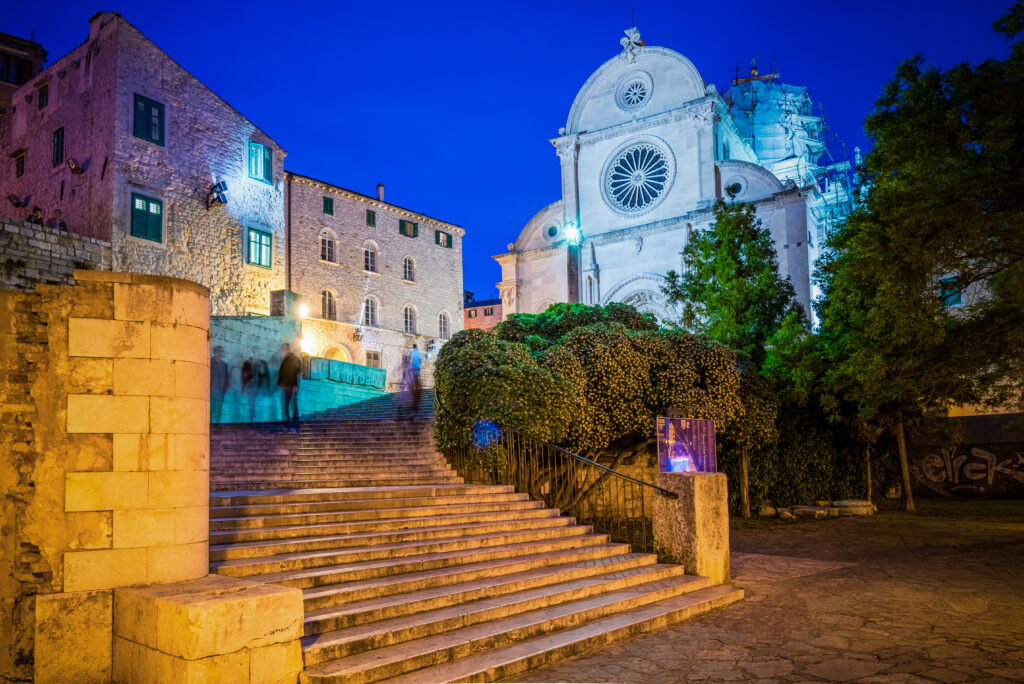
Cathedral of St James
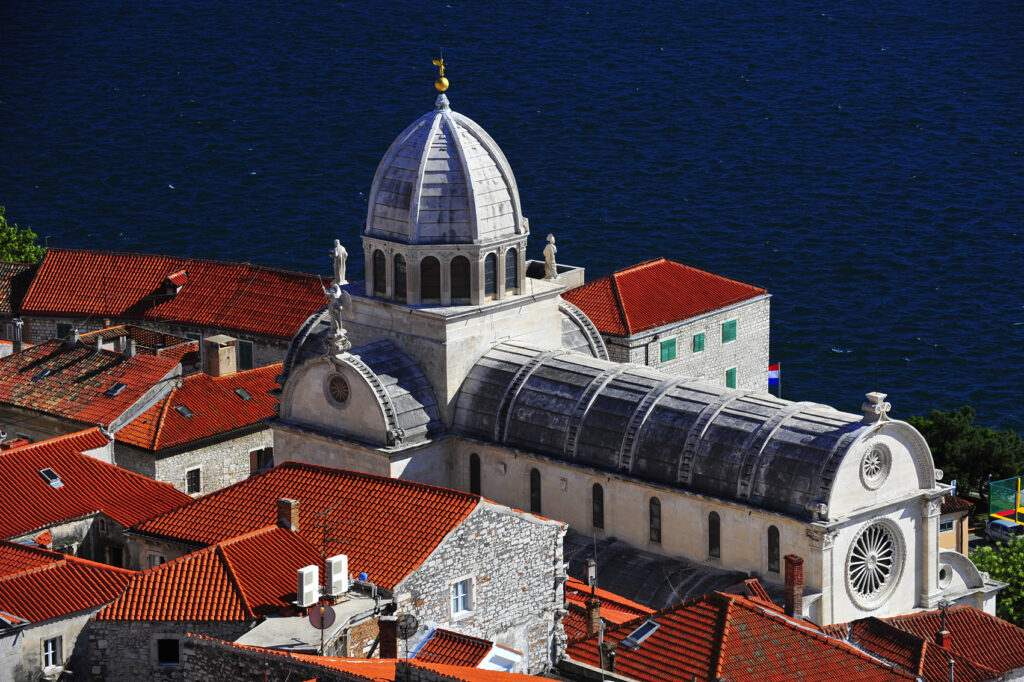
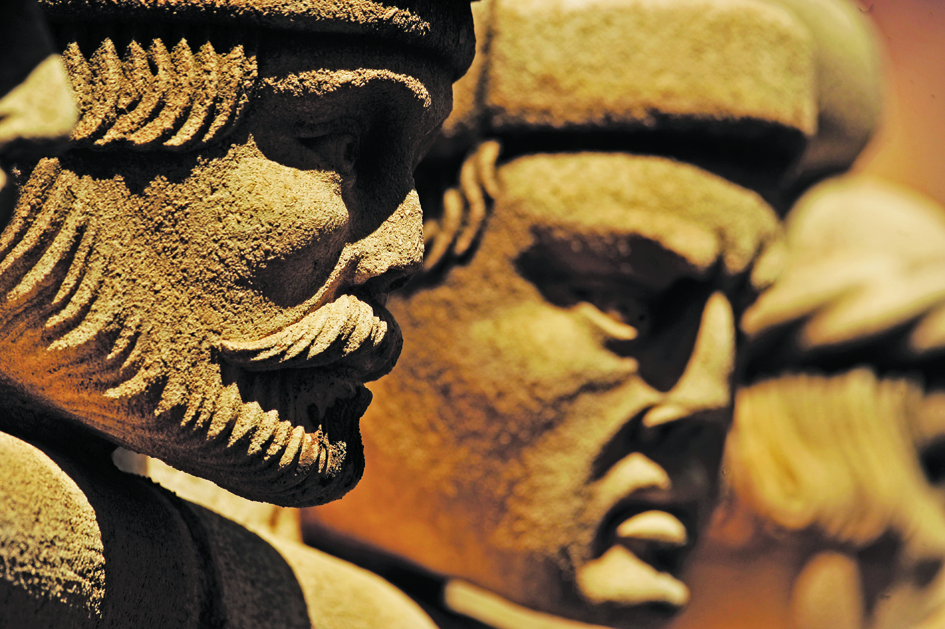
Ranking among Croatia’s foremost architectural accomplishments of the 15th and 16th centuries, the Cathedral of St James has held UNESCO World Heritage status since 2000. Work began in 1431 and continued through to 1536, drawing on the skills of many master builders, foremost among them Juraj Dalmatinac. The decision to raise a new cathedral was closely bound to Šibenik’s push for ecclesiastical and civic autonomy following the founding of its diocese in 1298. Restored during the 19th century, the cathedral was reconsecrated in 1860. View on Google Maps
Interpretation Centre “Civitas Sacra”
Housed in the Galbiani Palace at the very centre of Šibenik’s old town, a short walk from the UNESCO-listed cathedral, the “Civitas Sacra” Interpretation Centre of the Cathedral of St James is the product of a project worth more than 4.7 million euro. Devoted to bringing the region’s cultural heritage to life, it stands as the first large-scale Church-led infrastructure undertaking in Croatia to be backed by EU funding. Inside, visitors encounter the layered history of the Diocese of Šibenik alongside the architectural and cultural story of the cathedral and its meaning for the city. View on Google Maps
Šibenik City Museum
Established in 1925 to commemorate the millennium of the Croatian Kingdom, the Šibenik City Museum owes its beginnings to its first director, Don Krsto Stošić, who gifted his personal collection to it. The museum building was destroyed during the Second World War, taking much of the collection with it, and its work came to a halt after Stošić’s death in 1944. Rebuilding got under way in 1945 led by Prof. Frano Dujmović, and from 1947 the museum has been based in the Duke’s Palace. Its most flourishing period came under director Slavo Grubišić (1964–1992), a time of expansion, modernisation, and a new permanent display. The present permanent exhibition dates from 2012, and today the institution stands at the heart of Šibenik’s cultural life. View on Google Maps
St Michael’s Fortress
Perched on a rocky rise 70 metres above the sea, St Michael’s Fortress — also called the Castle of St Michael, and known locally as the Fortress of St Anne — marks the oldest and most central point of Šibenik. Its roots lie in an early Croatian tribal stronghold (castrum), first recorded in 998 and positioned to guard the entrance to Šibenik Bay and the Krka canyon along which the town grew. Reworked and rebuilt many times over the centuries, it today spans roughly 2,600 m², taking in the castle itself, outer grounds, barbicans, and a double ring of defensive walls. View on Google Maps
St John’s Fortress (Tanaja)
Set on a hill overlooking the old town, St John’s Fortress (Tanaja) takes its name from the chapel of St John that once stood on the site and was cleared to make way for it. Raised in 1646 at the outbreak of the Cretan War, it went up in a mere two months, thanks in large part to the townspeople of Šibenik, and followed the designs of the engineer Antonio Leni. It is distinguished by its star-shaped plan and the earthwork defence known as a tenaille (tenaglia). During the great Ottoman siege of 1647 the fortress proved decisive, holding off a force of some 20,000 attackers. View on Google Maps
Barone Fortress
A landmark of Šibenik’s heritage and a one-of-a-kind attraction, Barone Fortress weaves together history, modern technology, and the Mediterranean way of life. It is now held up across Europe as a model of good heritage management, doubling as a stage for cultural happenings, gatherings of local producers, and a place to learn about the city’s past. Its renewed spaces draw on the fortress’s 370 years of history, and the quality of its restoration has been affirmed by a string of awards and honours. View on Google Maps
St Nicholas’ Fortress
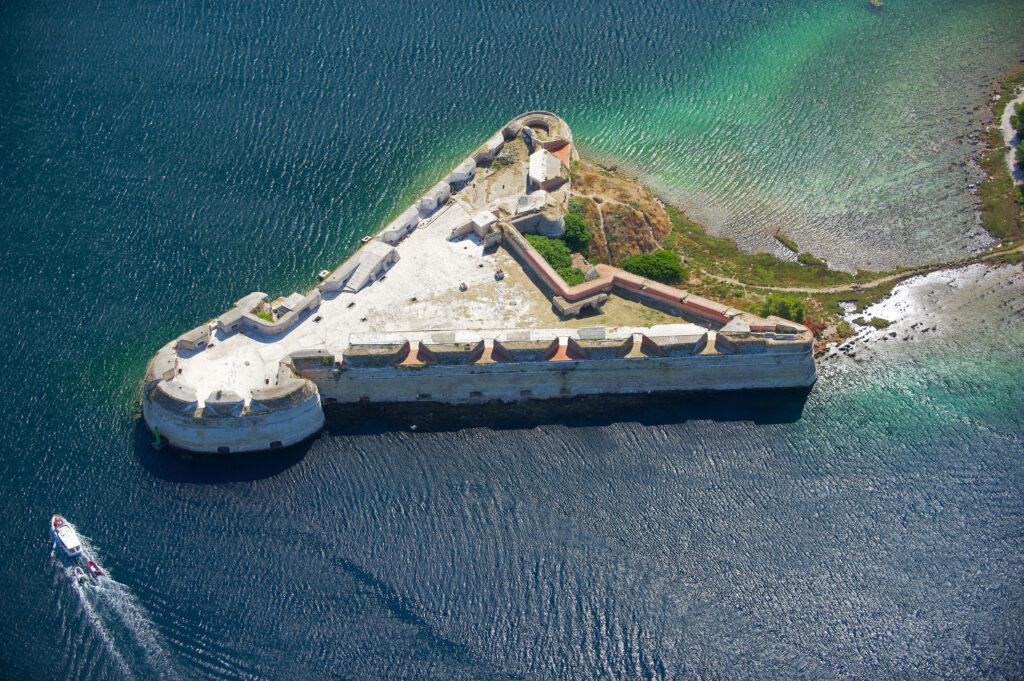
A striking example of maritime defensive architecture, St Nicholas’ Fortress was built to shield the sea approaches to Šibenik. Standing on the islet of Ljuljevac, it commands the entrance to St Anthony’s Channel. In recognition of its outstanding historical and architectural worth, it was added to the UNESCO World Heritage List on 9 July 2017, as part of the broader group of Venetian defensive works built between the 15th and 17th centuries.
Boats to St Nicholas’ Fortress set off from and return to the Šibenik waterfront, close to where Obala Hrvatske Ratne Mornarice meets Obala Dr. Franje Tuđmana. The 2026 timetable is available here: Departures Schedule | St Nicholas’ Fortress. View on Google Maps
All of the sights listed above sit within the old town centre or a short distance from it.
Šibenik also offers the Šibenik Card, issued by the Šibenik Tourist Board, which grants free entry to most of the city’s landmarks. Full details are available here: Šibenik Card.
